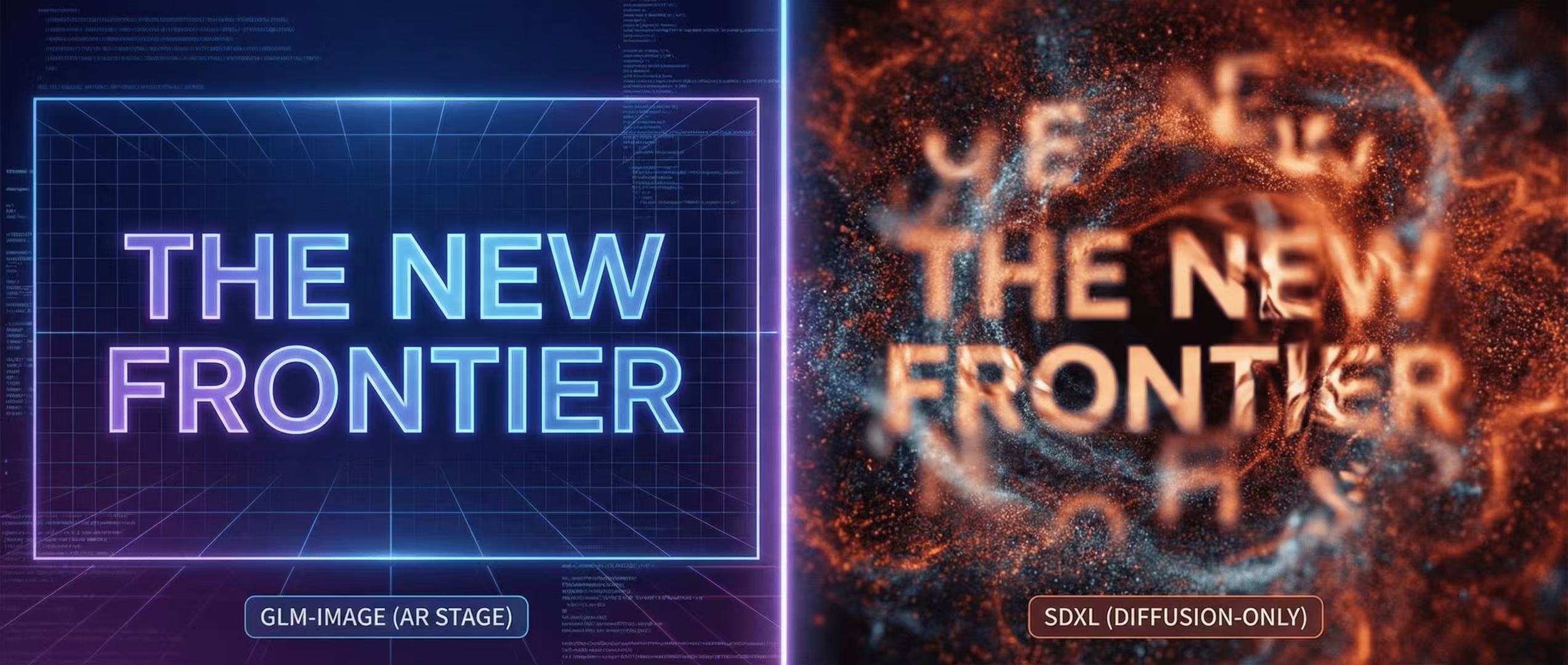
GLM-Image vs SDXL: Why Text Rendering is the New Frontier
A side-by-side comparison of text fidelity in complex layout generation. See why GLM-Image's AR stage outperforms traditional diffusion-only models.
When it comes to rendering text, traditional diffusion models like SDXL often struggle with character consistency and spatial alignment. GLM-Image introduces a paradigm shift with its Autoregressive (AR) Stage.
The Problem with Noise
Diffusion-only models attempt to "emerge" text from random noise. This works for textures but fails for structured glyphs.
The AR Advantage
GLM-Image plans the layout first. It knows where the letters should be before a single pixel is diffused.
Key Takeaways:
- Vertical Alignment: GLM-Image maintains perfect verticality.
- Kernning: Proper letter spacing is handled in the token space.
- Complex Characters: Better support for rare glyphs and non-Latin scripts.
More Posts

fal.ai Hosted GLM-Image: Production Integration Checklist
Deploy GLM-Image without managing GPUs—fal.ai API examples, latency considerations, and a production checklist.
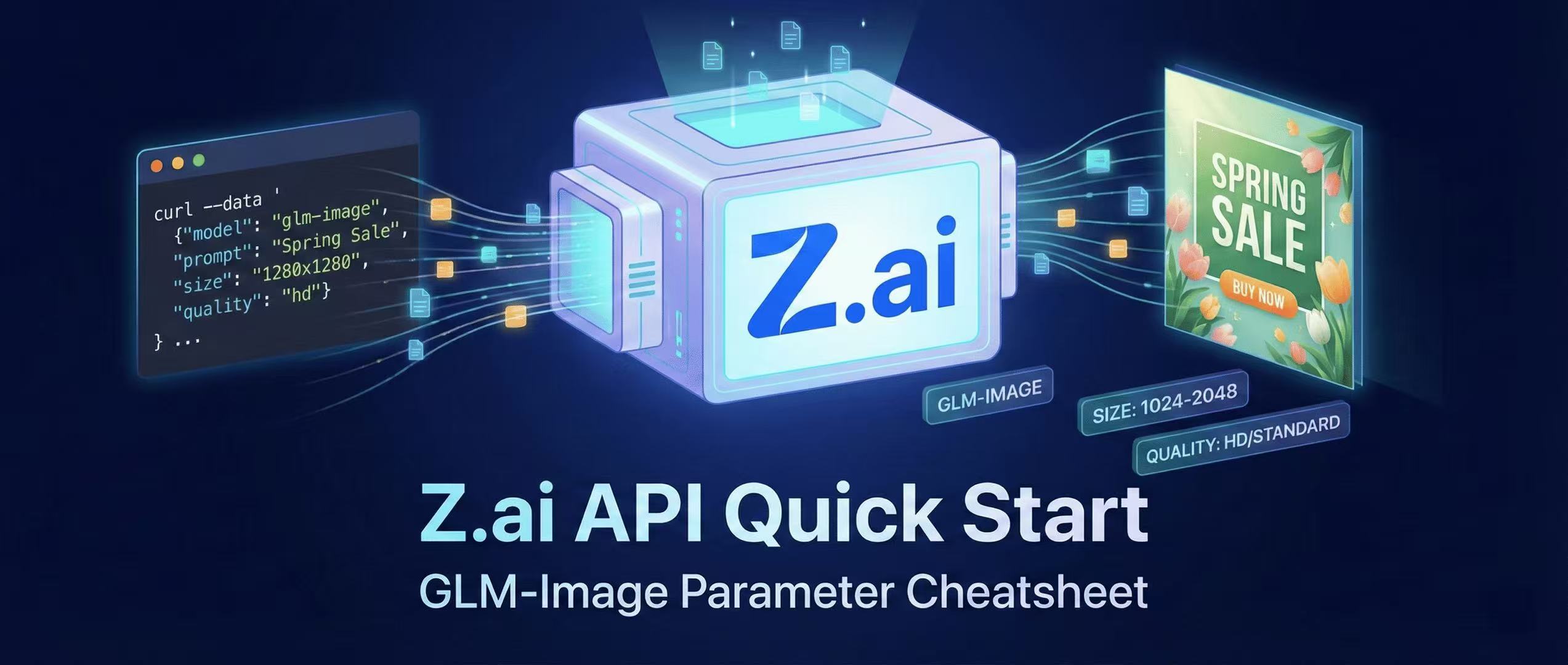
Z.ai API Quick Start + Parameter Cheatsheet
Generating images via GLM-Image using the official Z.ai API—includes curl and Python examples, sizing rules, quality modes, and best practices.
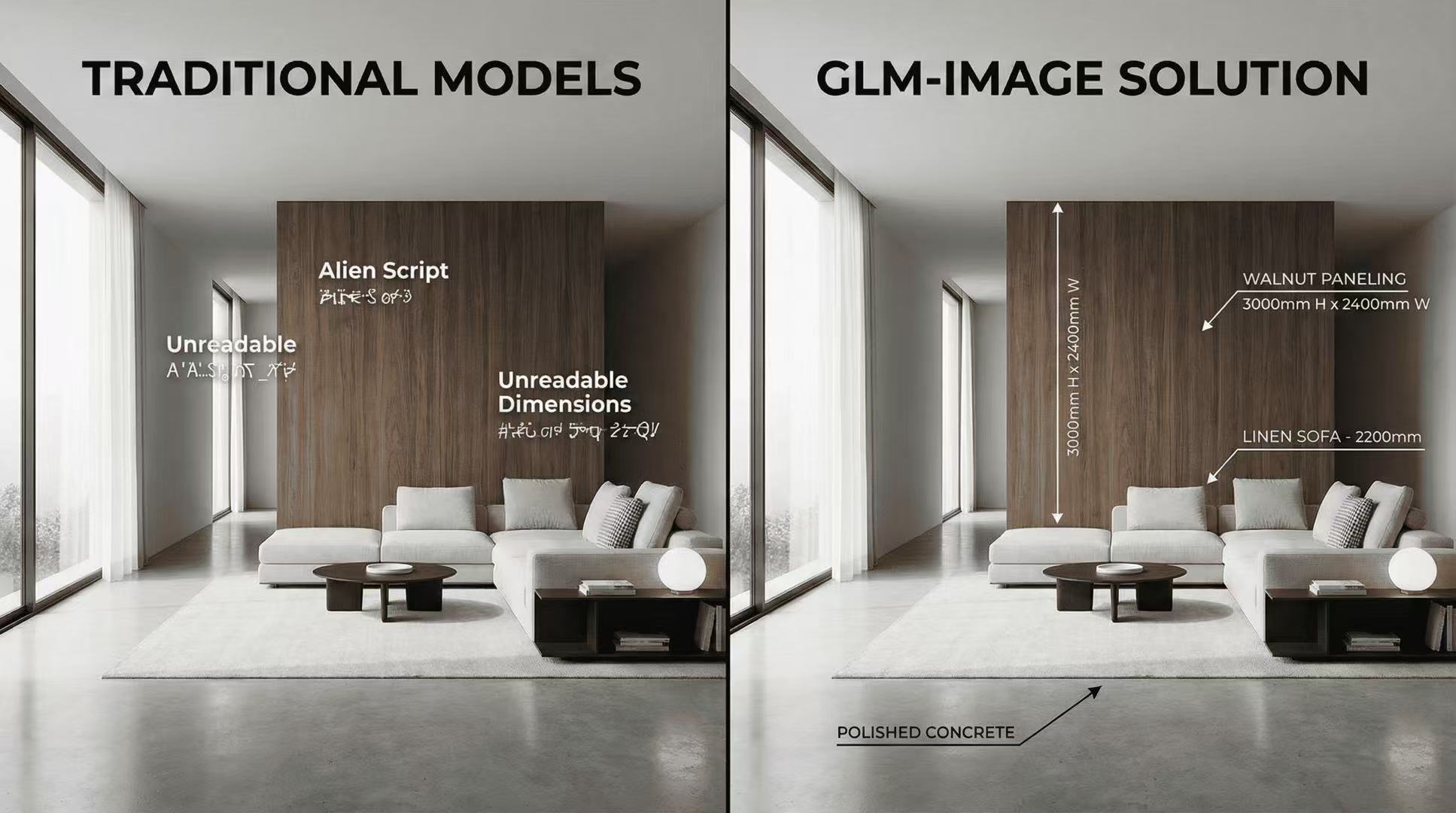
GLM-Image for Interior Design: Visualizing Spaces with Text
Why interior designers are using GLM-Image to include specific material labels and dimensional callouts in their renders.